
Some of the best connections happen when you least expect them.
I recently found myself in a coffee shop in Orlando, meeting a physician for the first time. I approached a gentleman who looked like the doctor’s LinkedIn photo and asked if he was my meeting. He wasn’t. We laughed, started chatting in line, and discovered an unexpected connection. Early in my career, I worked at a design firm that created most of the food and beverage collateral for Euro Disneyland. He casually mentioned that he helped open Euro Disneyland.
That gentleman was Lee Cockerell!
He handed me his business card, which was the size of a bookmark and unfolded to reveal several books he had written. I told him that I include a book review in every Marketing Rx newsletter and that I would feature one of his books. When I got home and did a little research, it hit me. I have been listening to his podcast, Creating Disney Magic, on and off for more than ten years. That familiar voice finally made sense.
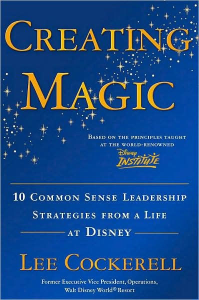
This month, I’m reviewing Creating Magic: 10 Common Sense Leadership Strategies from a Life at Disney, and I thoroughly enjoyed it.
You may be wondering how a book rooted in Disney leadership applies to physicians and private practices. Let me share why it absolutely does with some of the strategies that stood out to me.
Key Strategies That Resonated for Private Practice Physicians
Remember, Everyone Is Important (Strategy #1)
Cockerell emphasizes creating an environment where every employee and every customer feels valued as an individual.
For private practices, this translates directly to both team culture and patient experience. When staff feel seen and appreciated, it shows in how patients are greeted, roomed, and cared for. Patients can tell when they are being treated as a person rather than a number.
A powerful reflection he encourages is simple. Ask yourself regularly what you have done recently to show your team and your patients that they matter.
Create a Clear Vision and Communicate It Constantly (Strategy #2)
Vision is not a mission statement framed on the wall. It is something leaders talk about consistently and reinforce daily.
Many physicians assume their team understands the practice vision, but it has never been clearly defined or communicated. When vision is unclear, staff default to task completion rather than thoughtful patient care.
A clear and repeated vision aligns your team, strengthens culture, and supports a consistent patient experience.
Create Magic Through Training (Strategy #3)
One of my favorite questions in the book is this. Do the people who work for you act as though they just have a job, or do they perform with a sense of purpose?
Cockerell challenges leaders to instill purpose at every level of the organization and to clearly explain how each role contributes to the overall experience. In healthcare, that experience is patient trust and confidence.
Training is not just about tasks. It is about helping your team understand why their role matters and how it impacts the patient journey.
Eliminate Hassles (Strategy #5)
This chapter felt especially relevant.
In patient interviews, I often hear frustration about repetitive paperwork, unclear processes, and feeling like they have to start over at every visit. Cockerell encourages leaders to question processes regularly and ask, “Why do we do it this way?”
He also recommends revisiting new processes three to six months later to see if they are actually working. Most importantly, he urges leaders to ask customers directly what causes frustration and what works well.
For physicians, your patients already have the answers. You just have to ask.
Feedback Is a Gift – Even When It’s Uncomfortable (Strategy #7)
Disney actively sought feedback and used it as a tool for improvement, not criticism.
In private practice, patient feedback is often viewed emotionally or defensively. But feedback, especially when it is uncomfortable, is operational insight.
Online reviews, patient surveys, and referral comments are not just marketing signals. They are data points that can help improve systems, communication, and patient trust.
Why Doctors Should Read This Book
Many of the concepts in Creating Magic will feel familiar. That is part of its strength.
This book serves as a powerful reminder that:
If you view this book through the lens of being a physician and private practice owner, you will walk away with practical ideas you can apply immediately.
I originally downloaded the audiobook, but I quickly purchased a hard copy as well. First, because I hope to have Lee sign it one day. I also collect books written by Floridians. And second, because this book is full of action steps.
If you know me, you know I love a good list of action items.
Medical Marketing Maven’s Monthly Action Item
This month, take a moment to look closely at one patient-facing process.
Get curious about why it exists and how it truly feels from a patient’s perspective.
Ask yourself:
Then invite input from one team member and one patient. Listen openly, without defending, and make one small improvement you can put into practice right away.
Small changes, consistently applied, create real magic.
Book Review by Laura Woodard: Creating Magic: 10 Common Sense Leadership Strategies from a Life at Disney
Founder and CEO, GrassRoots Medical Marketing